

Understanding FDA and LFGB Certifications for Drinkware
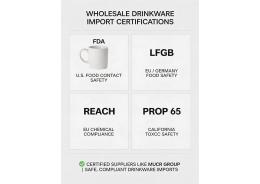
When it comes to ensuring the safety of drinkware products, two certifications stand out: FDA and LFGB. Both are essential in the international market, but they have distinct differences in terms of scope, regulatory requirements, and regional focus. If you're in the drinkware business or simply interested in the details, this guide will help you understand the key differences between these two certifications.
What is FDA Certification?
The FDA (Food and Drug Administration) certification is primarily recognized in the United States. It ensures that materials used in drinkware are safe for food contact and comply with U.S. regulations. FDA approval focuses on preventing harmful chemicals like lead, cadmium, and other toxic substances that could leach into food or beverages.
- Region: United States.
- Focus: Chemical safety and toxicology.
- Testing: Specific to U.S. standards, including GRAS (Generally Recognized As Safe) evaluations.
What is LFGB Certification?
LFGB stands for "Lebensmittel- und Futtermittelgesetzbuch," which translates to "Food and Feed Code" in German. It is a European certification and is particularly rigorous in testing materials used in drinkware. LFGB compliance requires migration testing, which ensures that no harmful substances transfer from the product to the food or drink under various conditions.
- Region: European Union, primarily Germany.
- Focus: Migration testing and material safety.
- Testing: Certified through strict laboratory analysis following EU regulations.
Key Differences Between FDA and LFGB Certifications
Though both certifications aim to ensure safety, they differ based on regional guidelines and testing approaches:
| Aspect | FDA | LFGB |
|---|---|---|
| Region | United States | European Union (Germany) |
| Testing Focus | Chemical toxicity | Material migration testing |
| Regulatory Standards | FDA Food Code | EU Food Contact Regulations |
Which Certification Should You Choose?
Choosing between FDA and LFGB certification depends on your target market. If your product is primarily sold in the United States, FDA certification is necessary. For Europe, particularly Germany, LFGB certification is the preferred standard due to its strict testing requirements.
For global businesses, obtaining both certifications ensures compliance across multiple regions and boosts consumer confidence in the quality and safety of your products.
Conclusion
Both FDA and LFGB certifications are invaluable for drinkware safety but serve different purposes and markets. By understanding the differences, businesses can make informed decisions about certification processes to meet regulatory requirements and cater to their specific customer base. Interested in learning more about drinkware standards? Visit MUCR Group for detailed insights and professional services!


 English
 German
 French
 Russian
 Spanish
 Japanese
 Korean
 Portuguese
 Ukrainian
 Arabic
 Italian

